
Blog
Baby-Led Weaning: Benefits, Safety & How to Start Solid Foods

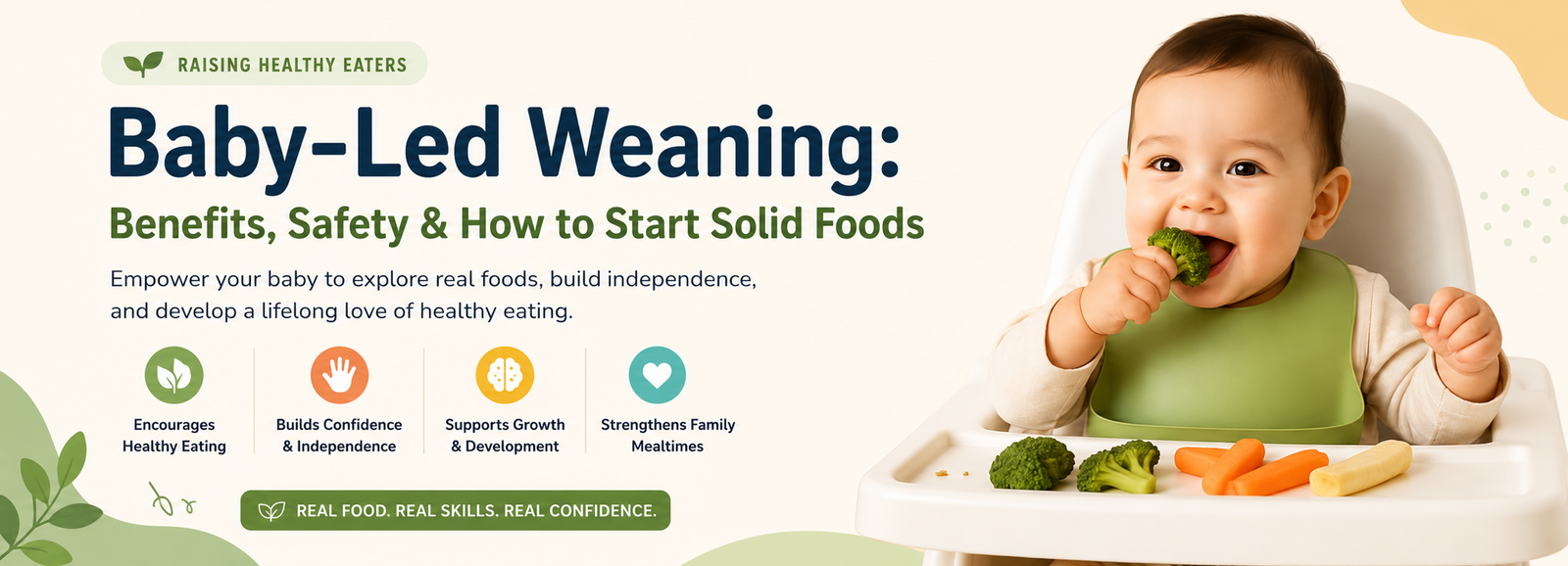
Baby-Led Weaning: Benefits, Safety & How to Start Solid Foods
Introduction
Introducing solid foods is an exciting milestone in your baby’s journey. Among the different approaches, baby-led weaning (BLW) has become increasingly popular for its simple, child-led method.
Instead of spoon-feeding purees, baby-led weaning encourages babies to explore soft, finger foods on their own, helping them build independence and develop a natural relationship with food.
With the right approach—and a safe feeding setup—this stage can be both enjoyable and stress-free.
What is Baby-Led Weaning?
Baby-led weaning is a method of introducing solids where babies feed themselves rather than being spoon-fed.
Typically started around 6 months of age, it allows babies to:
- Pick up food
- Explore textures
- Control how much they eat
This approach respects a baby’s natural hunger and fullness cues, making feeding more intuitive.
Benefits of Baby-Led Weaning
1. Encourages Independence
Babies learn to self-feed from the beginning, building confidence and motor skills.
2. Supports Healthy Eating Habits
By controlling how much they eat, babies are more likely to develop better appetite regulation.
3. Improves Coordination
Handling food helps strengthen hand-eye coordination and fine motor skills.
4. Makes Mealtimes Inclusive
Babies can gradually eat modified versions of family meals, making mealtimes more connected.
5. Promotes Sensory Development
Touching, tasting, and exploring different foods helps babies become more accepting of textures and flavours.
When to Start Baby-Led Weaning
Most babies are ready at around 6 months, but readiness signs are more important than age.
Look for these signs:
- Sitting upright with minimal support
- Good head and neck control
- Interest in food
- Ability to grasp and bring objects to the mouth
How to Start Baby-Led Weaning
1. Begin with Soft, Easy-to-Hold Foods
Start with foods that are soft enough to mash:
- Steamed vegetables (carrot, sweet potato)
- Soft fruits (banana, avocado)
- Idli or well-cooked rice
2. Offer Finger-Length Pieces
Food should be easy to hold—about the size of an adult finger.
3. Let Your Baby Take the Lead
Allow your baby to decide how much to eat. Avoid forcing or rushing the process.
4. Create a Calm Mealtime Routine
Eating together as a family helps babies learn by observing others.
Choosing the Right High Chair for Baby-Led Weaning
A safe and comfortable seating setup is an important part of baby-led weaning. Since babies are actively learning to self-feed, proper positioning supports both safety and confidence during meals.
Using a baby dining chair or high chair helps create a stable and consistent feeding environment.
What to Look for in a Good High Chair
 Sturdy and Stable Design
The chair should be strong and well-balanced to prevent tipping, especially as babies move during meals.
Safety Harness (3-Point or 5-Point Belt)
A secure harness keeps your baby safely seated and prevents slipping or standing.
Footrest Support
A footrest allows babies to:
- Sit comfortably
- Maintain proper posture
- Improve chewing and swallowing
Easy-to-Clean Materials
Baby-led weaning can be messy. Look for surfaces that are easy to wipe and maintain.
Supportive Seating Position
Your baby should be able to sit upright without slouching, with proper back support.
Removable Tray
A detachable tray makes cleaning easier and allows flexibility as your baby grows.
Why Seating Matters in Baby-Led Weaning
A good high chair supports:
- Safe swallowing posture
- Better focus during meals
- Reduced risk of choking due to poor positioning
- A consistent mealtime routine
Simple adjustments like keeping your baby upright with supported feet can make a significant difference.
Baby-Led Weaning Safety Tips
Safety is essential during this stage.
- Always supervise your baby while eating
- Ensure your baby is sitting upright
- Avoid hard, small, or round foods
- Cook food until soft and easy to mash
- Introduce one new food at a time
Gagging vs Choking: Understanding the Difference
Gagging is a natural reflex and common in baby-led weaning.
- Gagging: Noisy, baby coughs and pushes food out
- Choking: Silent, difficulty breathing (requires immediate attention)
Understanding this helps parents stay calm and confident.
Baby-Led Weaning in Indian Households
Baby-led weaning can be easily adapted to Indian meals.
Suitable first foods:
- Soft idli pieces
- Dal rice (lightly mashed)
- Steamed vegetables
- Ripe fruits
- Soft chapati soaked in dal
Keep food low in salt, sugar, and spices initially.
Common Concerns About Baby-Led Weaning
Will my baby eat enough?
Breast milk or formula remains the main source of nutrition until 1 year.
Is it too messy?
Yes—and that’s part of the learning process.
Is it safe?
Yes, when done with proper food choices, supervision, and safe seating.
Conclusion
Baby-led weaning is a natural and engaging way to introduce your baby to solid foods. With the right foods, a safe setup, and a little patience, it can become a positive experience for both baby and parent.
Creating a comfortable feeding environment—along with following safety guidelines—helps build confidence and healthy eating habits from the very beginning.