
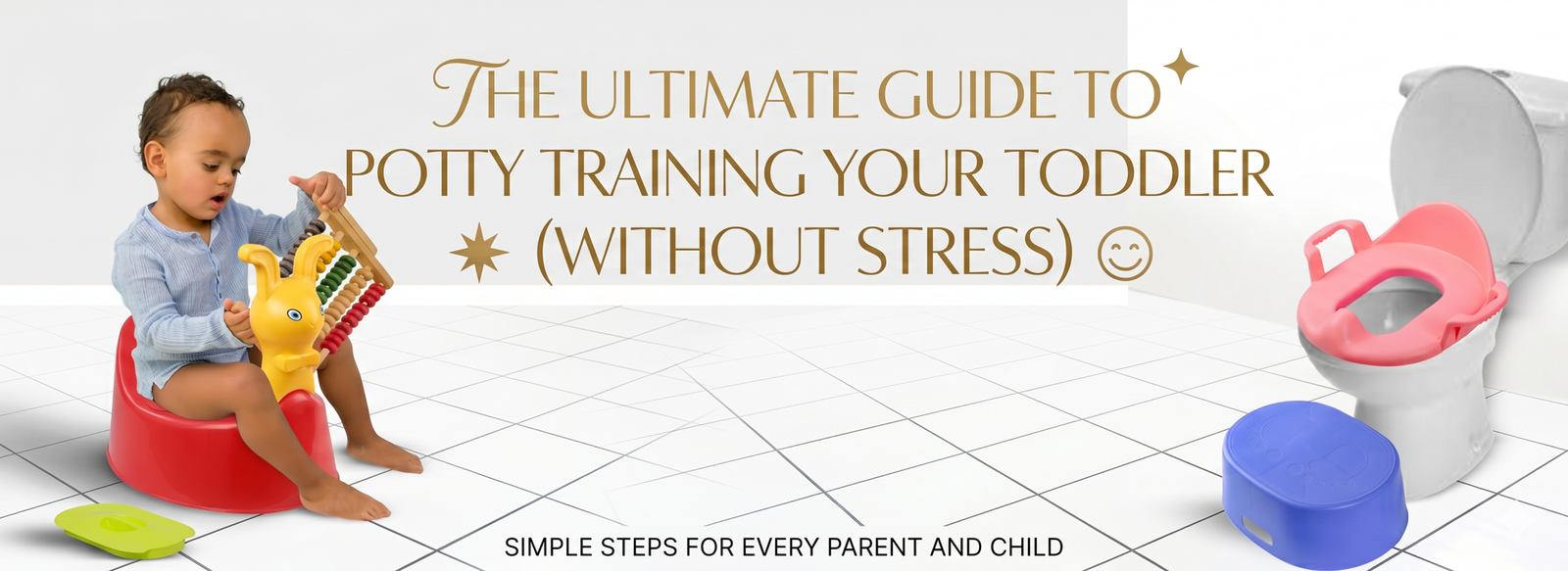
The Ultimate Guide to Potty Training Your Toddler (Without Stress)

Potty training is one of the biggest milestones in your child’s early years—and let’s be honest, it can feel overwhelming. The good news? With the right timing, tools, and mindset, it can be a smooth (and even fun!) experience for both you and your toddler.
This guide will walk you through everything you need to know—from recognizing readiness signs to choosing the right potty setup.
When Is the Right Time to Start?
Every child is different, but most toddlers are ready between 18 months to 3 years.
Signs your child may be ready:
- Stays dry for 2+ hours
- Shows interest in the bathroom
- Can follow simple instructions
- Communicates when they’ve peed or pooped
- Feels uncomfortable in a dirty diaper
 Tip: Don’t rush it. Starting too early can lead to resistance.
Choosing the Right Potty Setup
The right setup can make a huge difference in your child’s confidence and success.
What to look for in a good potty:
 Stable and sturdy design (no wobbling!)
- Comfortable seating
- Foot support or stool (important for proper posture)
- Easy to clean
- Grows with your child
A 3-in-1 potty system—that works as a standalone potty, a trainer seat for the toilet, and includes a footstool—can be especially helpful. It allows your child to transition gradually from potty to the actual toilet without fear.
Foot support is not just comfort—it helps kids push effectively and feel secure.
Step-by-Step Potty Training Approach
1. Introduce the concept
Talk about using the potty. Let your child observe and get familiar.
2. Create a routine
Start by sitting them on the potty:
- After meals
- Before bedtime
- First thing in the morning
3. Ditch the diaper (when ready)
Switch to training pants or underwear during the day.
4. Celebrate small wins
Even sitting on the potty is progress! Encourage without pressure.
5. Expect accidents
They’re part of the process. Stay calm and supportive.
 Common Mistakes to Avoid
- Starting too early
- Forcing your child
- Showing frustration
- Comparing with other kids
- Skipping consistency
What About Night Training?
Night-time dryness usually takes longer. Focus on:
- Limiting fluids before bed
- Using the potty right before sleep
- Being patient—this phase can take months
Making Potty Training Easier (for You & Your Child)
The key to successful potty training is confidence and comfort.
A setup that feels safe—like one with a built-in trainer seat and foot support—can help your child feel independent and secure. When toddlers feel in control, they’re far more likely to cooperate.
Quick Potty Training Checklist
- Child shows readiness signs
- Consistent daily routine
- Comfortable potty setup
- Positive reinforcement
-
Patience (lot’s of it!)
Final Thoughts
Potty training isn’t a race—it’s a journey. Some days will be easy, others messy—and that’s okay.
With the right approach and tools, your little one will get there in their own time.